Kachō-e: Bird & Flower in the Snow
01
Nature in Detail
By CDO, Museable Digital Curator
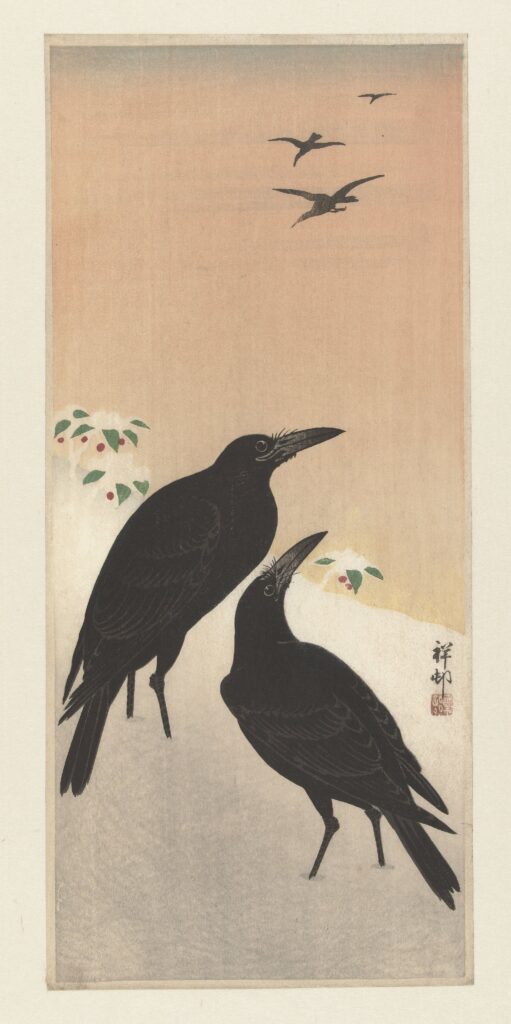
Kachō-e (花鳥絵), “bird-and-flower pictures,” is a traditional Japanese woodblock print genre focusing on nature studies, including birds, flowers, insects, and fish. A subset of ukiyo-e, these prints often feature detailed, naturalistic close-ups. Masters include Ohara Koson (also known as Shoson or Hoson), Hokusai, Hiroshige, Ito Sozan, and Imao Keinen.
Snow in Kachō-e creates a clean, minimalist backdrop for the striking natural elements depicted. It is a common feature in shin-hanga (new prints) and earlier ukiyo-e designs, used to create a sense of stillness, coldness, and melancholy, or to highlight the resilience of nature.
02
The Masters
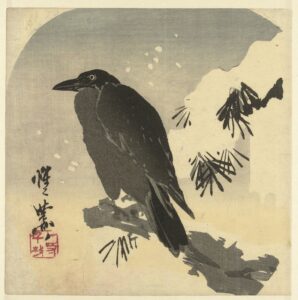
Kawanabe Kyôsai
Kawanabe Kyōsai was a Japanese painter and caricaturist. In the words of art historian Timothy Clark, “an individualist and an independent, perhaps the last virtuoso in traditional Japanese painting”.
Ohara Koson
Ohara Koson (1877–1945) was a Japanese master of Kachō-e, woodblock printing of the bird-and-flower designs. His training in painting gave his prints a watercolor aesthetic now associated with his style.
Image (left), Two blue and white birds on a snow-covered bush with green leaves and bunches of red berries, against a gray background with snowflakes. Image (center) Crow on cherry blossom branch, facing left, full moon. Image (right), A pheasant leaves tracks in the snow, a second pheasant appears in the background against the rosy evening sky.
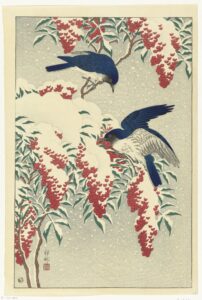
Flycatchers on snow-covered
nandin bush (1925-1936)
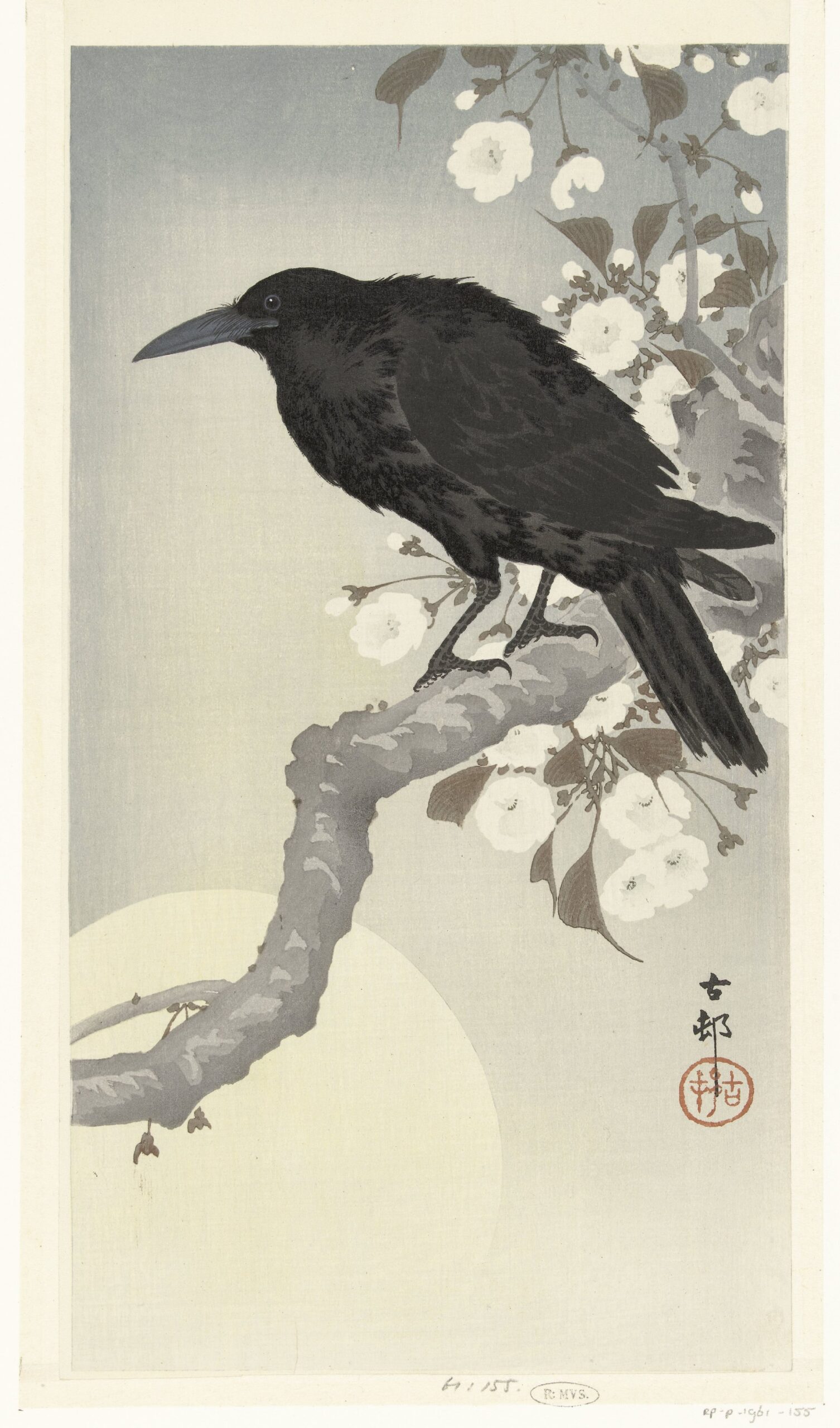
Kraai bij volle maan (1900-1930)
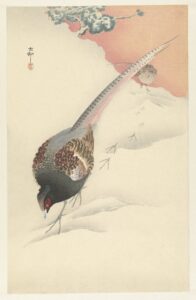
Pheasants in the Snow (1900 – 1945)
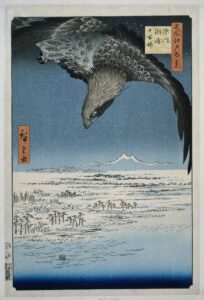
Utagawa Hiroshige
Utagawa Hiroshige or Andō Hiroshige, born Andō Tokutarō, was a Japanese ukiyo-e artist, considered the last great master of that tradition.
Winter solitude—
In a world of one color
The sound of wind
— Basho
03
Shades of White
Flowers like the white plum or lily often symbolize “hidden virtue” or a moral purity that remains untainted by the “mud” of the world. In Japanese culture, white (shiro) is the color of the gods and spiritual transition. White Herons or Cranes aren’t just birds; they often represent longevity, elegance, and a connection to the divine.
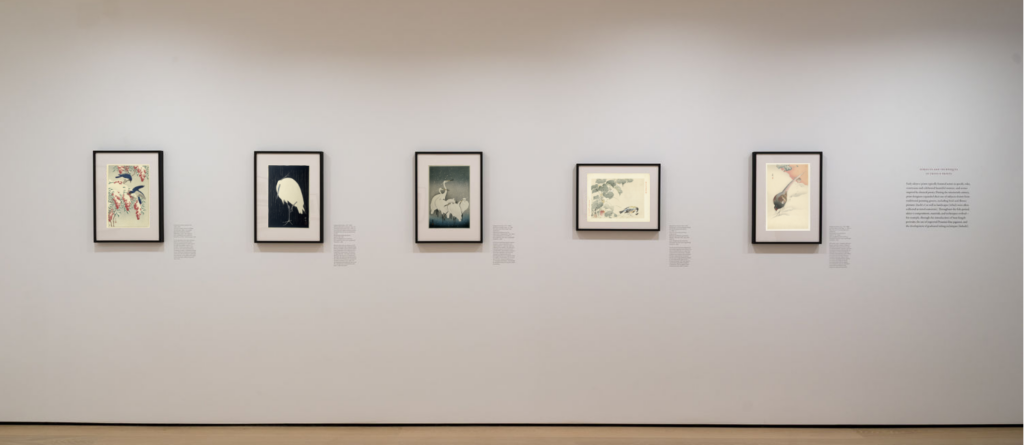
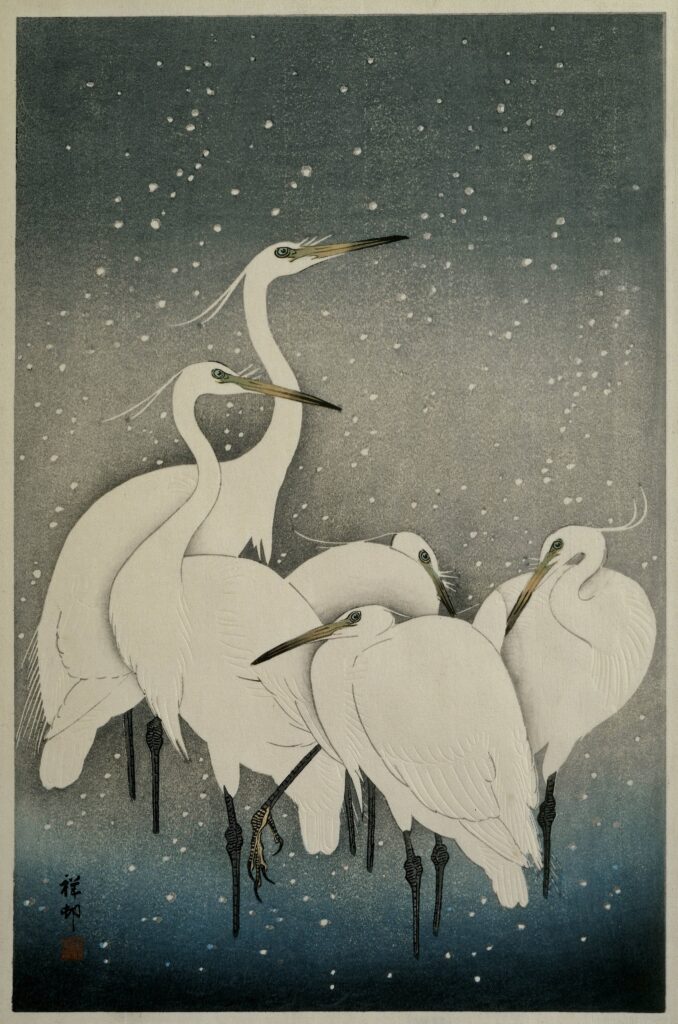
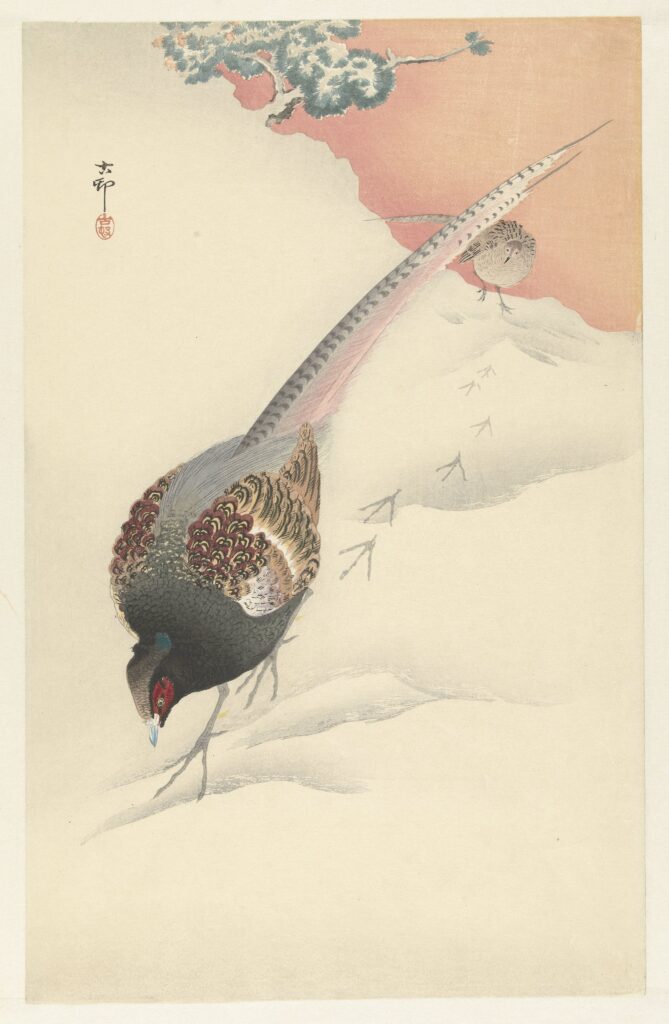
Top: Museable Gallery; Bottom Left: Group of Egrets in Snow by Ohara Koson; Bottom Right: Pheasants in the Snow by Ohara Koson
04
Karazuri and Negative Space

Little Egret in the Rain
Zilverreiger in de regen (Little Egret in the Rain), by Ohara Koson, is a masterpiece of the Shin-hanga (New Prints) movement. Created between 1925 and 1936, it showcases Koson’s ability to blend traditional Japanese woodblock techniques with a modern, almost atmospheric realism.
The print is celebrated for its technical difficulty and its evocative, moody composition. The bird’s feathers aren’t just white ink—they have texture. Koson used a technique called karazuri (blind-printing or embossing).
Negative space is often used to represent “nothingness” or “air.” Here, Koson uses the solid black background to represent a heavy, rain-filled night. The black space isn’t “empty”—it has weight. By stripping away any background details, Koson uses negative space to force your eyes onto the contour of the bird.


Miles of frost –
On the lake
The moon’s my own.
— Buson
05
Kingfisher in the Snow
Courtesy of the Rijkesmuseum
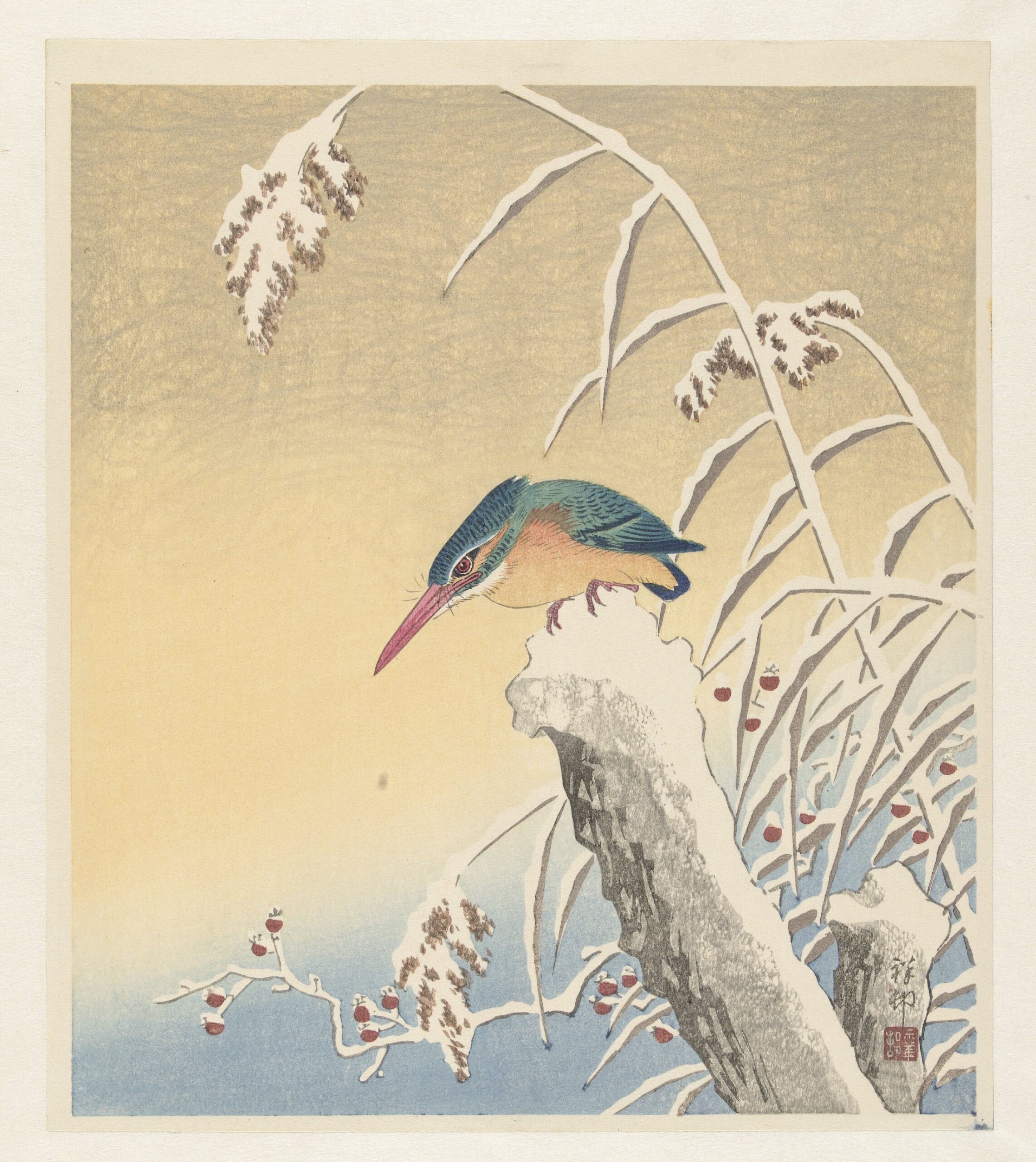
Another work by Ohara Koson, Kingfisher in the Snow is dated around 1925–1936. Koson uses the vibrant colors of the Kingfisher to contrast with the muted backgroundof winter. By placing this hyper-colorful bird in a frozen, desolate landscape, Koson emphasizes the vitality of life. The bird stands out against it like a defiant spark in the winter.
The snow in this print has weight, bending the reeds underneath. Koson leaves large portions of the paper unprinted or very lightly washed to represent a thick winter sky, creating a sense of silence.
Koson’s mastery of the Shin-hanga style is visible in the tiny details. The kingfisher’s sharp, dark red beak is pointed downward, creating a strong diagonal line that gives the composition “tension”. It is as if the bird is about to dive despite the freezing conditions.
Koson also adds small red berries or “winter plums” to the scene. This “Red-on-White” is a classic Japanese motif representing happiness or luck in the face of hardship.
06
Learn more about Kacho-e
Japanese Prints for Beginners – Kacho-e
by artelino Art Auctions
Our Sponsors and Partners
Supporting cultural excellence and preservation since 2008