
Fragments of Historical Walls
April 15 to August 30, 2025
Main Gallery, Floor 2
10:00 AM – 4:00 PM
All Ages
Step through time in this exhibit showcasing ancient walls that once defined cities, empires, and everyday lives. Each fragment tells a story of craftsmanship, resilience, and cultural legacy.
The ancient walls offers a rare glimpse into the architectural legacy of early civilizations. From the weathered stones of Roman fortifications to the intricate carvings of Mesopotamian temple walls, each fragment tells a story of empire, ritual, and daily life. These structures, once towering and imposing, now stand as powerful remnants—bearing the marks of time, conflict, and craftsmanship. Visitors can explore how ancient builders used local materials, sophisticated techniques, and symbolic designs to create walls that served both protective and cultural purposes. Together, these artifacts reveal how walls were more than just boundaries—they were storytellers in stone.
01 Surviving Structures
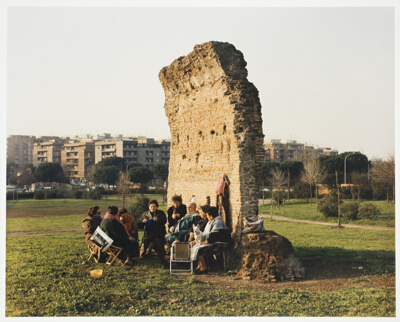
Women at Their Daily Gathering Beside an Ancient Roman Wall, Parco dei Gordiani, Rome, from the series “Campagna Romana: the Countryside of Ancient Rome”
Unmarked on recto; inscribed and signed on verso, on mount, lower center along the bottom edge, in black ink.
“JS.117.4 5/7 Women at their daily gathering beside an ancient Roman wall, Parco dei Gordiani, Rome, October 1990 Joel Sternfeld”
This captures a quiet, timeless moment where contemporary life unfolds beside remnants of imperial grandeur. Part of the Campagna Romana: The Countryside of Ancient Rome series, the image juxtaposes modern routines with the enduring presence of history, reflecting the intimate coexistence of past and present in the Roman landscape.
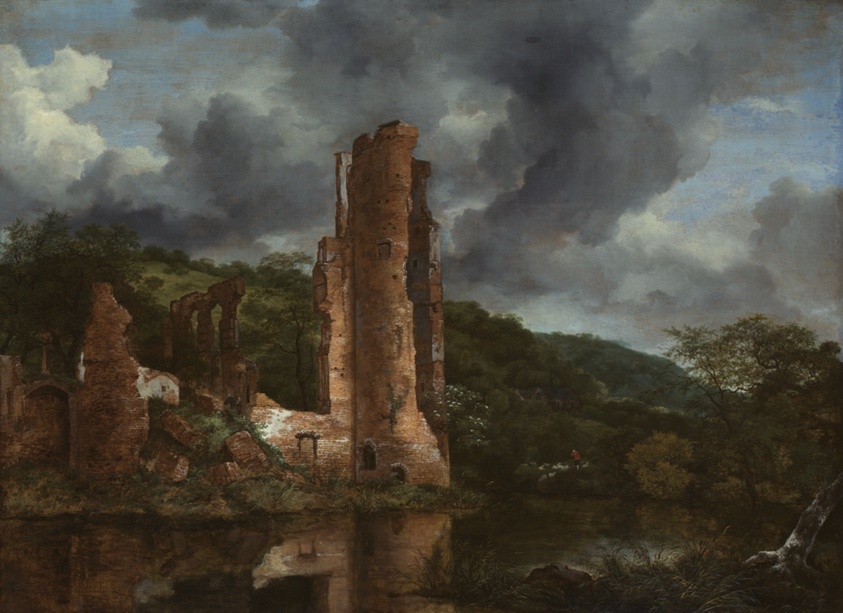
Landscape with the Ruins of the Castle of Egmond
The deteriorating Castle of Egmond was a visible reminder of the Dutch struggle for independence: it was sacrificially destroyed during the revolt against Spain more than 80 years before Jacob van Ruisdael produced this painting. Landscape specialists like Van Ruisdael invoked Dutch patriotism by selecting sites representative of the republic, including ruins, windmills, and city views. Ruisdael distinguished himself by working on an unusually large scale and by imbuing his scenes with drama through low horizon lines and swollen clouds.
02 Groves and Gates
From intricate sculptures to kinetic installations, artists use gears, pipes, and metalwork to explore themes of technology, time, and transformation.
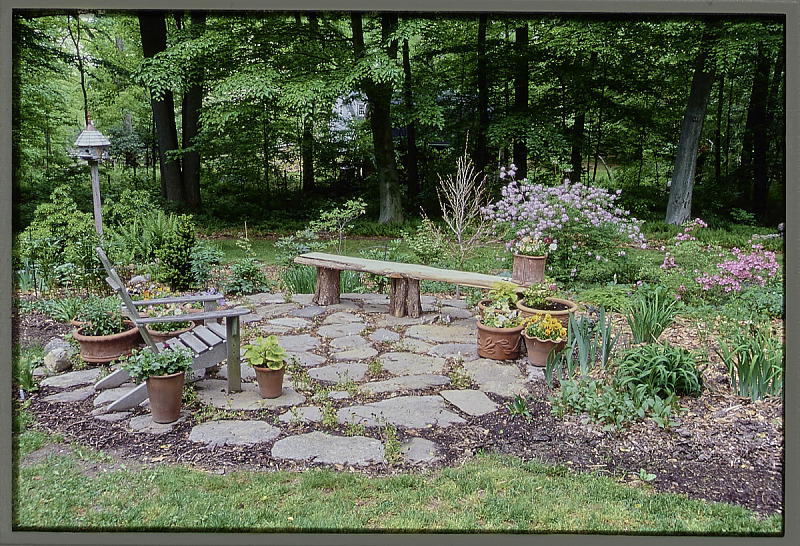
Fairfield – Patterson Garden
An earlier colonnade at the front of the house has been replaced by an allée comprised of twelve 30-foot tall Chanticleer pear trees, each under planted with four Green Pillow boxwood. The walkway to the front door is comprised of pea gravel edged in granite set, with a small granite set terrace and two antique urn container gardens filling the transition to the front steps.
Behind the house a grass terrace is surrounded by a perennial border with a line of espaliered European pear trees and topiary yew pillars marking the transition to the lower lawn. Old trees and yew hedges provide shade and privacy for the long, rectilinear site. The primary color for blooms in this garden has been white, including white peonies, ancient hydrangeas, antique and shrub roses in white and pink, and the blooming pear trees in the spring.
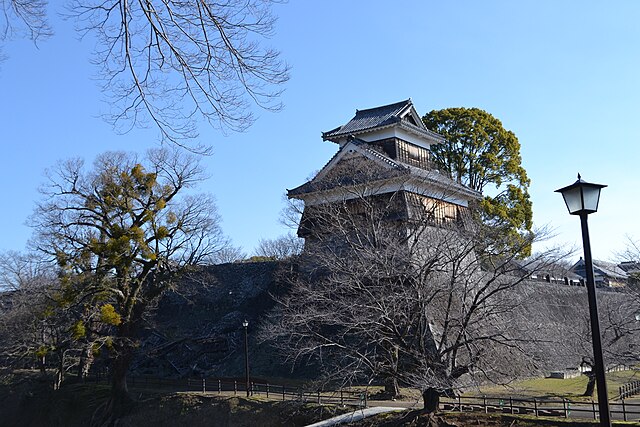
Kumamoto Castle
It is famed for its massive stone walls, known as musha-gaeshi, which curve outward to prevent scaling—an ingenious defensive feature. Built primarily from timber and stone in the early 1600s, the castle showcases expert masonry with interlocking stones that form steep, sloped bases. These walls not only withstood centuries of weathering but also reflected the sophistication of feudal Japanese engineering.
The artist skillfully uses atmospheric perspective to create depth, with softened tones in the distant sky and land drawing the eye inward. Rich in textural detail, the ruins are rendered with a careful attention to masonry—each jagged stone and weathered surface reinforcing the passage of time.
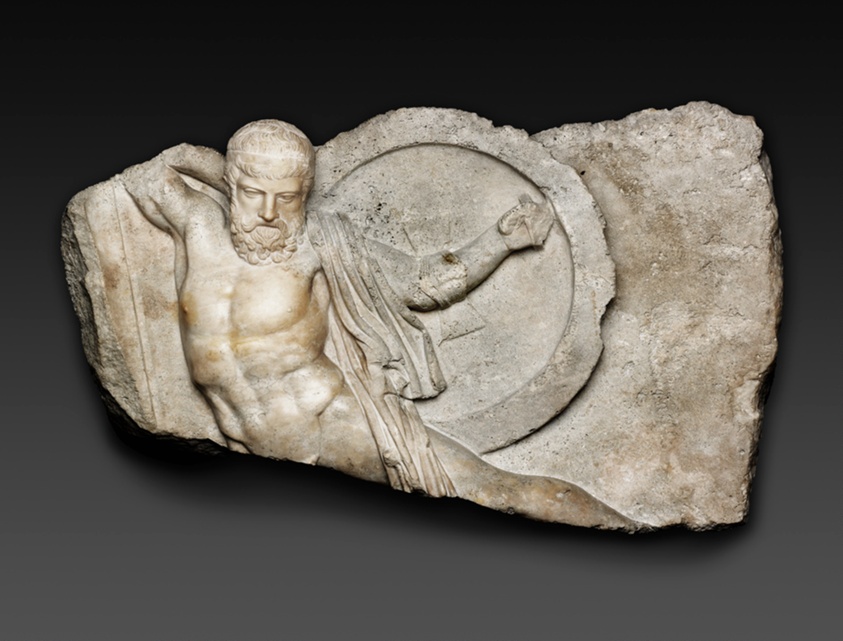
Relief of a Falling Warrior, 2nd century
Around 435 BCE, the sculptor Pheidias decorated the shield of his statue of Athena in the Parthenon with scenes of Greeks fighting Amazons during the Trojan War, reflecting the Athenian ideal of noble, mature masculinity. Centuries later, during Roman times, elements of these scenes were adapted into marble reliefs used to decorate elite homes and public spaces. Roman collectors like Emperor Hadrian admired and commissioned works in the Pheidian style, leading Athenian sculptors to reproduce these classical themes for export. Several such reliefs were later discovered near the Athenian port of Piraeus, likely lost during transport.
Credits
Collection items retrieved courtesy of the Art Institute of Chicago and the Smithsonian Institution.